
ResinDek® Flooring for Ground-Floor Robotic Applications
The ResinDek Advantage: Optimizing Ground Floors for Robotics
Does Your Ground Floor Present Significant Obstacles in Your Facility?
While more operations are deploying Automated Guided Vehicles (AGVs) and Autonomous Mobile Robots (AMRs) in their facilities, the existing ground floor often presents significant obstacles. Many ground floors like concrete often lack the durability needed for the repetitive movements of robots.
Why Concrete Often Falls Short for Robotic Warehouses:
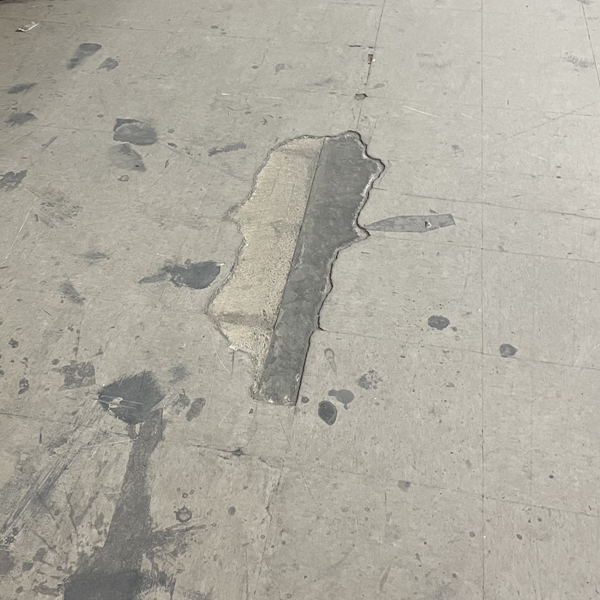
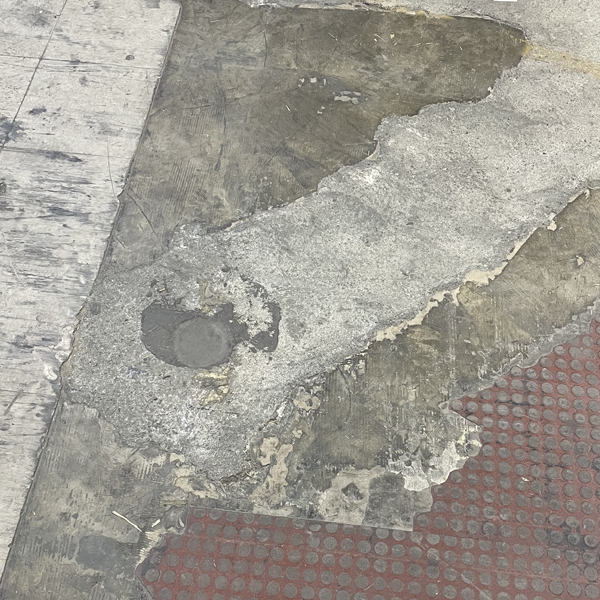
- Uneven surfaces, including swales, slopes, cracks & spalling
- Time consuming & demanding
- Inconsistencies from patching areas
- Significant operational disruptions during application or repair
- Financial burdens & hazards with underlying floor coverings
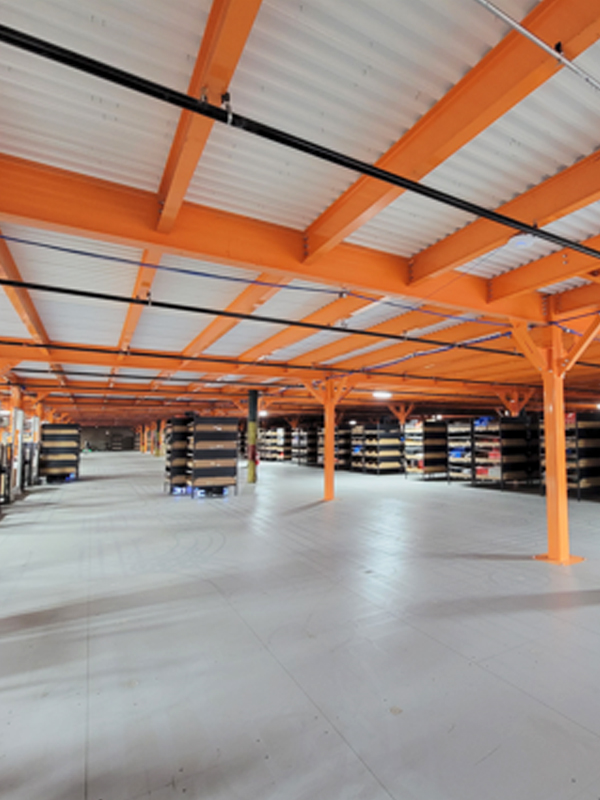
Fortunately, ResinDek® panels offer a direct solution by installing over existing ground floors. ResinDek provides the ideal flooring for industrial robots, creating a level surface with crucial characteristics for successful robotic deployment. Our panels have undergone rigorous testing in the labs of numerous AGV and AMR manufacturers, as well as our own, confirming their superior durability and wear resistance specifically for robotic applications.
Key Challenges For Robotic Deployments On Ground Floors
As traditional warehouse space becomes increasingly scarce, companies are adapting diverse facilities for distribution and fulfillment. These locations, originally designed for other purposes, often present flooring challenges for automated systems. Simultaneously, the growing need to overcome workforce limitations is driving the adoption of warehouse robots like AGVs and AMRs for material handling. However, deploying these advanced vehicles on inadequate floor surfaces can severely impact their performance.
Common ground floor issues that hinder robotic operation include:
- Coefficient of Friction: An improper coefficient of friction, or surface roughness, prevents the vehicle’s wheels from gaining adequate traction to accelerate, stop, and change directions.
- Unlevel Surfaces: Variations in floor level can force robots to reduce speed and navigate inefficiently.
- Sensor Interference: Reflectivity that falls outside the optimal range can disrupt the navigational sensors crucial for autonomous robot operation.
- Physical Obstructions: Cracks or spalling in the floor create physical barriers that robots cannot safely or effectively traverse.
- Insufficient Durability: Repeated robotic traffic patterns can quickly degrade the floor surface, leading to operational disruptions and maintenance needs.
Concrete is a common existing floor material, but adapting it for robotic applications can be problematic. While options like grinding uneven areas, patching cracks, adding a new concrete layer, or applying an epoxy coating exist, they come with substantial drawbacks:
- Time and Labor Intensive: Grinding concrete is a lengthy process requiring significant manual effort and generating substantial dust, disrupting operations.
- Inconsistent Results: Patched areas often don’t match the original concrete’s properties, creating inconsistencies that can negatively affect robot navigation and performance.
- Extended Downtime: Pouring new concrete or applying epoxy coatings requires significant drying and curing time, leading to prolonged operational downtime. Furthermore, these solutions still lack the long-term wear resistance demanded by continuous robotic use.
- Hidden Hazards and Costs: Existing facilities might have underlying floor coverings like asbestos-containing tiles. Safe removal is costly and hazardous, and the exposed concrete beneath is likely to require further, costly remediation due to adhesive residue and damage.
Installing ResinDek Panels on Existing Ground Floors for AGV/AMR Operations
Preparing an existing ground floor for ResinDek panel installation involves a crucial step: ensuring a level surface optimized for robotic performance. This begins with a precise digital mapping process to identify and document variations in floor elevation. Any slopes or swales are then corrected and leveled, and cracks are properly patched and sealed, resulting in a completely even foundation.
The installation of ResinDek panels follows a meticulously engineered layout provided by Cornerstone Specialty Wood Products, which takes into account the building’s structural elements like columns. Engineered ResinDek HD or ResinDek Xspan panels are then laid directly over the prepared existing floor – no additional subfloor is necessary. ResinDek panel precise tongue-and-groove design ensures a seamless transition between panels, preventing any issues with robotic wheel movement.
Choosing ResinDek floor panels over traditional concrete repairs offers a faster, cleaner, easier, and more cost-effective path to creating an optimal flooring surface specifically designed to support successful AGV and AMR deployments.
Related Documents & Case Studies
CASE STUDY
Evergreen Enterprises Installs ResinDek for AMRs
CASE STUDY
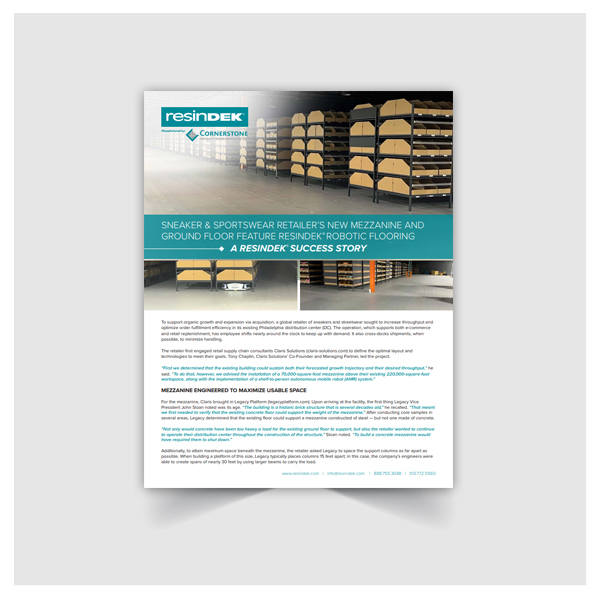
ResinDek Flooring in Retailers New Mezzanine & Ground Floors
DOCUMENT
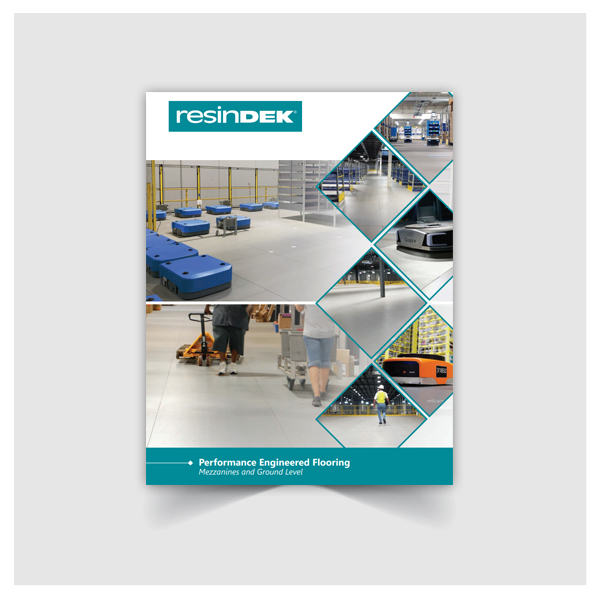
ResinDek Material Handling Brochure