
ResinDek® Flooring for Ground-Floor Robotic Applications
The ResinDek Advantage: Optimizing Ground Floors for Robotics
Common Ground Floor Obstacles for AGV & AMR Deployments
As warehouse operations deploy Automated Guided Vehicles (AGVs) and Autonomous Mobile Robots (AMRs), existing concrete ground floors frequently become major operational bottlenecks. Standard concrete simply isn’t engineered to handle the continuous, highly concentrated wheel loads of warehouse automation.
Why Concrete Falls Short for Warehouse Robotics:
- Surface Defects: Slopes, swales, cracks, and spalling cause sensor errors and accelerate tire wear.
- Costly Downtime: Grinding, patching, or re-pouring concrete requires lengthy facility shutdowns and curing waits.
- Inconsistent Surfaces: Spot repairs create variable friction levels that disrupt robot acceleration and navigation.
- Hidden Environmental Hazards: Removing old floor coverings like tile or adhesive can reveal expensive remediation risks.
ResinDek® engineered panels solve these issues by installing directly over your existing ground floor—creating a level, and durable surface without prolonged operational downtime. Rigorously tested in major AGV/AMR manufacturer labs and our own facilities, ResinDek delivers the exact wear resistance and friction characteristics required for maximum robotic uptime.
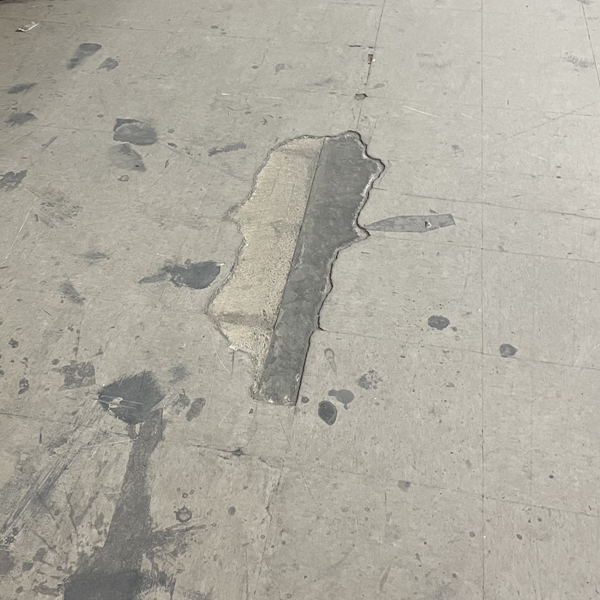
Key Challenges for AGV & AMR Deployments on Ground Floors
As distribution and fulfillment operations adapt existing facilities to combat labor shortages, unconditioned ground floors present significant technical obstacles for Automated Guided Vehicles (AGVs) and Autonomous Mobile Robots (AMRs). Standard industrial concrete slabs—originally poured without robotics in mind—frequently cause navigation errors, increased mechanical wear, and operational downtime.
| Ground Floor Issue |
Impact on AGVs & AMRs | ResinDek® Panel Solution |
|---|---|---|
| Improper Friction |
Wheel slippage prevents precise acceleration, stopping, and turning. | Engineered finishes provide consistent, optimal wheel traction. |
| Unlevel Elevation |
Slopes and swales force robots to slow down or navigate off-course. |
Digital floor mapping and precision tongue-and-groove layout create a flat surface. |
| Sensor Interference |
Excessive gloss or inconsistent reflectivity throws off LIDAR and optical sensors. | Controlled reflectivity and ESD finishes ensure accurate autonomous navigation. |
| Cracks & Spalling |
Physical surface breaks damage robot wheels and trigger safety stops. | Panels help cover existing cracks and physical defects, improving floor performance |
Why Traditional Concrete Repairs Fall Short
Remediating problematic concrete through conventional methods often introduces severe operational trade-offs. While grinding, epoxy applications, and re-pouring offer temporary fixes, they require extensive downtime, create environmental hazards, and rarely deliver long-term durability under constant robotic traffic.
| Repair Method | Drawbacks & Hidden Risks | ResinDek® Retrofit Advantage |
|---|---|---|
| Grinding & Patching |
Time-consuming, produces heavy dust, and patched areas wear inconsistently. | Installs completely dry with zero dust generation or curing wait times. |
| Epoxy Coatings | Extended drying periods cause downtime; prone to chipping under robot wheels. | Pre-finished panels offer immediate full traffic use with superior scratch resistance. |
| New Concrete Overlay |
Adds massive floor weight and requires weeks of curing before deployment. | Lightweight panels install quickly directly over the existing slab without curing delays. |
| Tile/Covering Removal |
Uncovers hazardous materials (like asbestos tile) requiring costly abatement. | Installs directly over old subfloors and tile, avoiding expensive environmental remediation. |
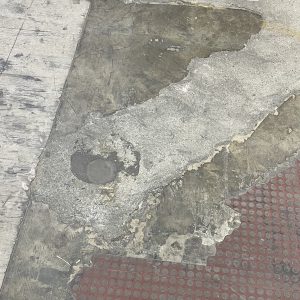
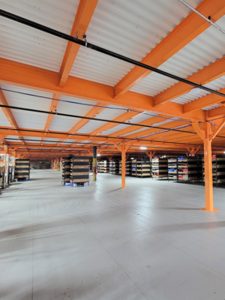
Installing ResinDek Panels on Existing Ground Floors for AGV/AMR Operations
Preparing an existing ground floor for ResinDek panel installation involves a crucial step: ensuring a level surface optimized for robotic performance. This begins with a precise digital mapping process to identify and document variations in floor elevation. Any slopes or swales are then corrected and leveled, and cracks are properly patched and sealed, resulting in a completely even foundation.
The installation of ResinDek panels follows a meticulously engineered layout provided by Cornerstone Specialty Wood Products, which takes into account the building’s structural elements like columns. Engineered ResinDek HD or ResinDek Xspan panels are then laid directly over the prepared existing floor – no additional subfloor is necessary. ResinDek panel precise tongue-and-groove design ensures a seamless transition between panels, preventing any issues with robotic wheel movement.
Choosing ResinDek floor panels over traditional concrete repairs offers a faster, cleaner, easier, and more cost-effective path to creating an optimal flooring surface specifically designed to support successful AGV and AMR deployments.
GROUND FLOOR FAQs
How does ResinDek® reduce installation downtime compared to concrete repairs or epoxies?
Pouring new concrete layers or applying multi-stage epoxy coatings requires extensive curing and drying times that can shut down operations for days or weeks. ResinDek® panels install cleanly and quickly with custom tongue-and-groove layouts—eliminating long curing waits and allowing your facility to resume operations much faster.
Will ResinDek® panels handle heavy robotic wheel loads and repetitive traffic patterns?
Yes. ResinDek® panels undergo rigorous testing in both internal testing labs and facilities run by major AGV and AMR manufacturers. They are specifically engineered to withstand heavy, localized wheel loads and the continuous, repetitive travel paths typical of warehouse automation.
Which finish options prevent static discharge and sensor interference on robotic floors?
ResinDek® offers specialized ESD-control coatings, such as TriGard ESD Ultra and TriGard® ESD, designed to protect sensitive robotic electronics from static buildup while maintaining the exact coefficient of friction and reflectivity required for reliable sensor navigation.
Related Documents & Case Studies
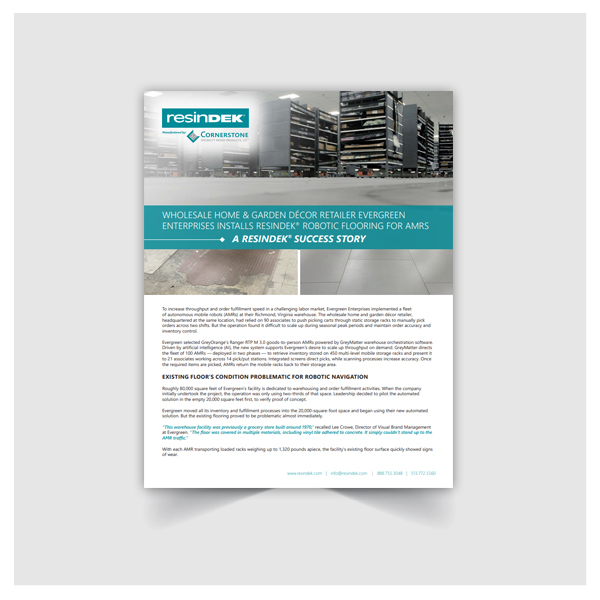
CASE STUDY
Evergreen Enterprises Installs ResinDek for AMRs
CASE STUDY
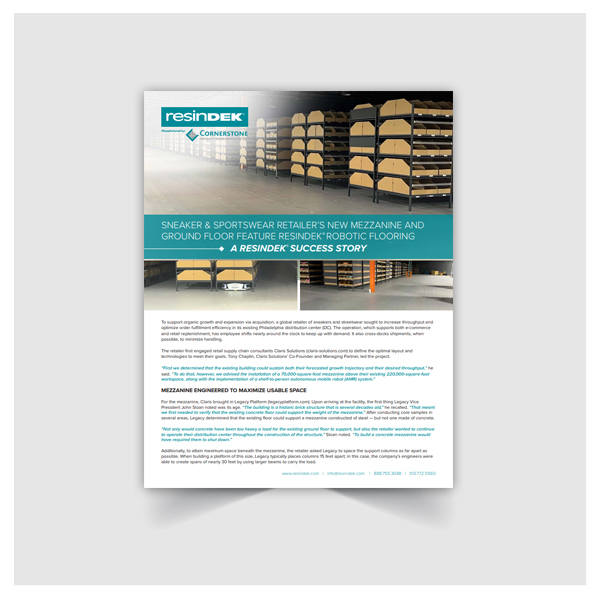
ResinDek Flooring in Retailers New Mezzanine & Ground Floors
DOCUMENT
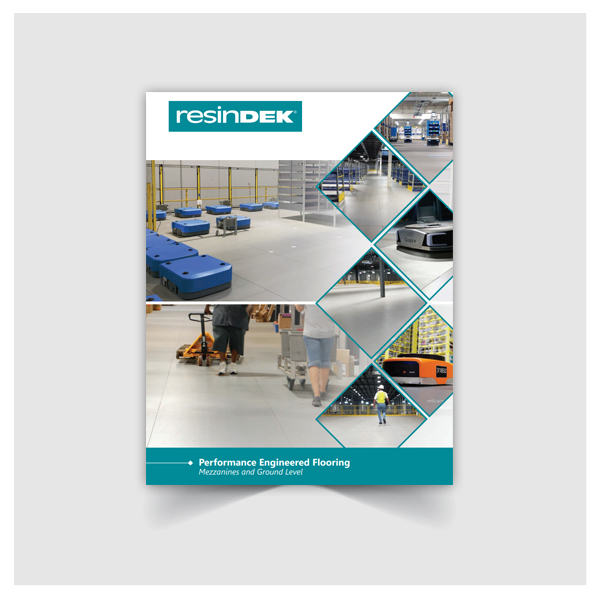
ResinDek Material Handling Brochure