
As companies add more SKUs to their product offerings or increase their overall customer shipments, they need more and more space to accommodate those demands.
You may have noticed over the last few years that prime commercial real estate has become scarce and more expensive. Because of this, retailers, 3PLs, and distributors are making concessions and getting creative in deciding where they are willing to set up new warehouse operations. Using former office buildings, grocery stores, and shopping malls for warehouse space is a common practice today.
But those buildings were not designed for warehouse operation and may not have the characteristics conducive to robotics or even fulfillment in general. There are several considerations to keep in mind when it comes to warehouse expansion, especially if the space will be subject to mobile robotic traffic.
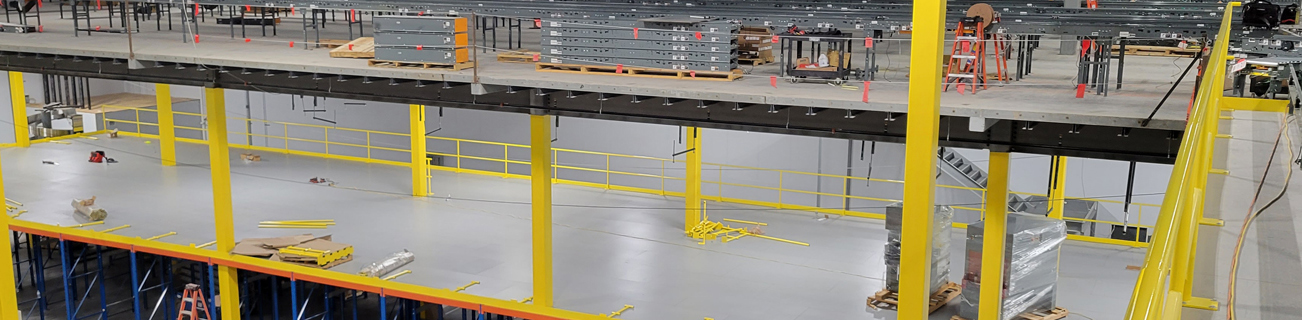
What To Consider Before Expanding Your Warehouse
Floor Type and Floor Condition
- Is it flat and level? Can robots climb the slope? Will the loads fall off the robots?
- Is the floor cracked and broken? Are there gaps that a robot can’t traverse?
- What is the coefficient of friction of the surface? Will it allow for AGV/AMRs to accelerate, stop, and change directions without sliding?
- Will the floor dissipate static charges (ESD)?
- How long will the surface hold up to repeated caster snaps in high-traffic areas?
Mezzanine Loading
- Will the current mezzanine/platform accommodate the weight of the robots, plus the load, plus racking, plus product?
- What is the condition of the current mezzanine floor?
- Is there a way to get pallets up to the platform from the floor?
- How will picked orders get from the mezzanine to the pack-out area or shipping dock?
Expanding Your Warehouse Vertically Could Be Your Best Option
An alternative to finding a new warehouse is building up in your existing building. Most picking operations only utilize six to eight feet of space off the floor when the warehouse ceiling may be at 25 to 40 feet (7.6 to 12.2 m). Utilizing that unused vertical space by adding a platform or mezzanine can be a cost-effective way to get better picking /storage density without the hassle and expense of moving to a new warehouse.
Moving your operation (including the people, equipment, racks, and inventory) to a new warehouse is a huge disruption to your service level and can take months to stabilize in the new warehouse. Will the current employees make the move with you? Getting the most out of your existing warehouse before expanding or moving will almost always be a less expensive option.
Regardless of which option you choose when it comes time to grow, Cornerstone Specialty Wood Products can be at your side to evaluate the floor in a new or existing building and help you select the best flooring solution for any application – at ground level or on a mezzanine or work platform. Contact us to learn about how we can help you.